Gamification
Microlearning Project


Role
Instructional Designer & Course Developer
Date
Summer 2025
Gamification is often misunderstood as simply adding points or badges to learning. This project was designed to introduce faculty and instructional designers to the principles of meaningful gamification through a concise, visually engaging microlearning experience.
Developed as part of the SUNY Center for Professional Development (SUNY CPD) Instructional Design Certification Program, the module demonstrates how common game elements—including progress tracking, challenges, rewards, and feedback—can be intentionally incorporated into higher education courses to increase learner motivation and engagement while supporting meaningful learning outcomes.
The project emphasizes practical application over theory alone, pairing evidence-based design principles with accessible visuals and real-world examples from multiple academic disciplines. Playful illustrations, consistent branding, and simplified visual communication were intentionally used to model the same engagement principles discussed throughout the module.
Project Details
Location
SUNY Center for Professional Development, online Instructional Design Certification Program
Project Type
Microlearning Module




Featured Course Resource (Link)
Gamification Microlearning Module
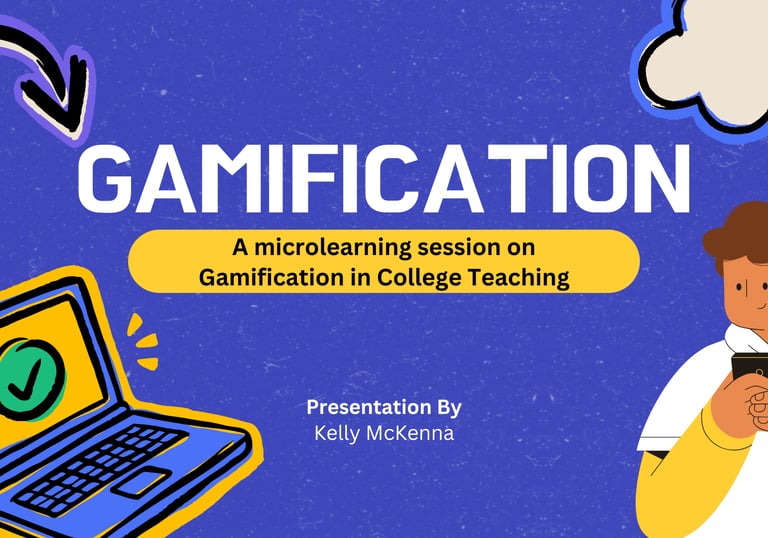
The opening slide introduces the microlearning module and establishes a playful visual identity that reflects the engaging, learner-centered approach used throughout the project.
Why Gamification?
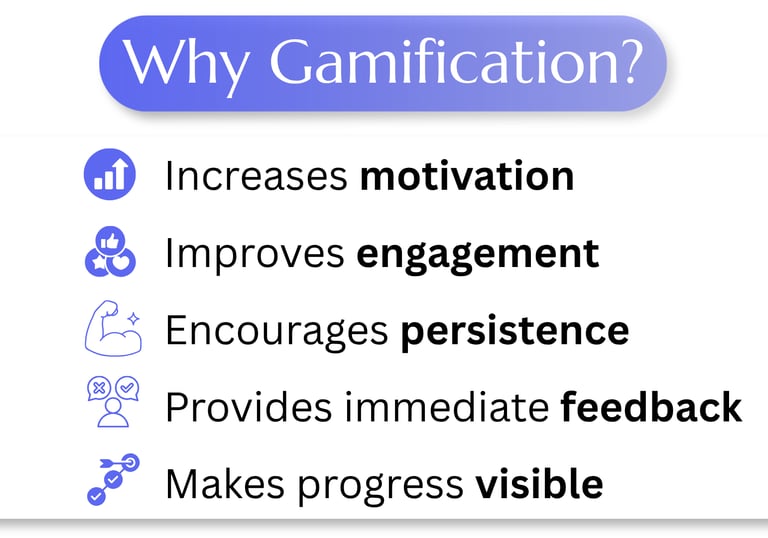
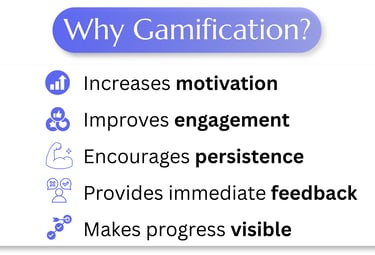
Introduces the educational value of gamification by summarizing five key benefits that support learner motivation, engagement, persistence, feedback, and progress.
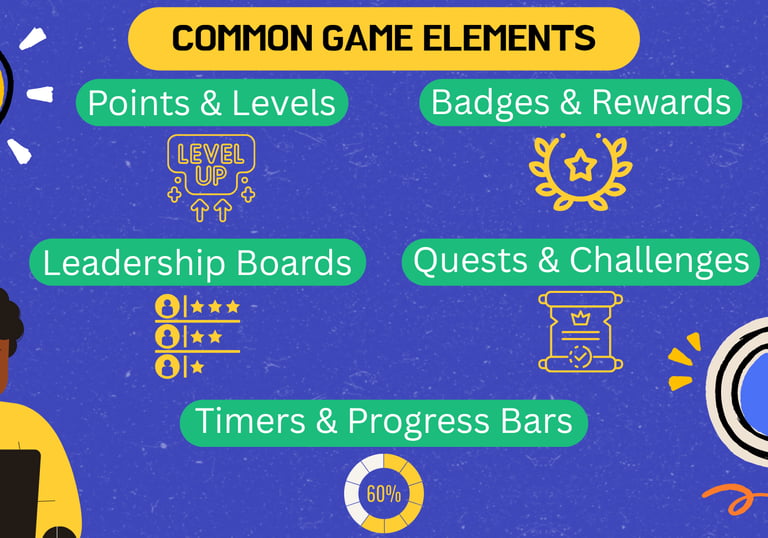
Highlights common game mechanics—including points, badges, leaderboards, and challenges—that can be incorporated into instructional design to encourage learner participation and progress.
Common Game Elements
01
02
03
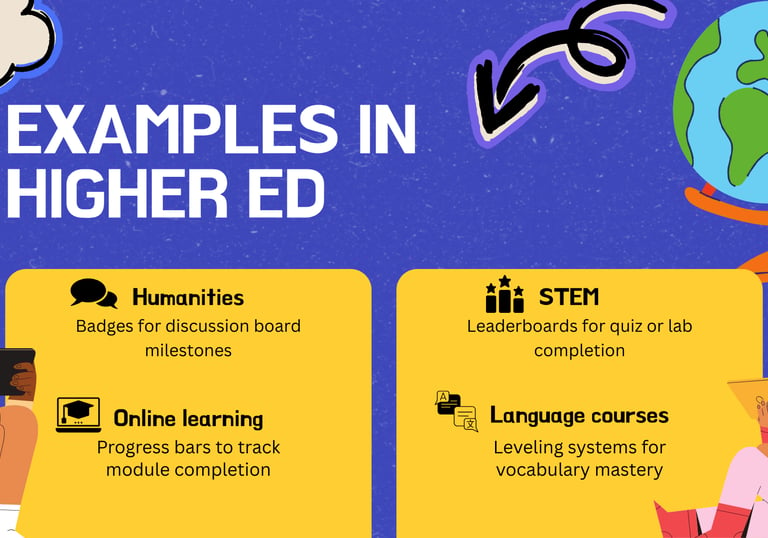
Gamification in Higher Education
Demonstrates practical examples of gamification in higher education, illustrating how game mechanics can be adapted across a variety of disciplines and learning environments.
Best Practices for Gamification
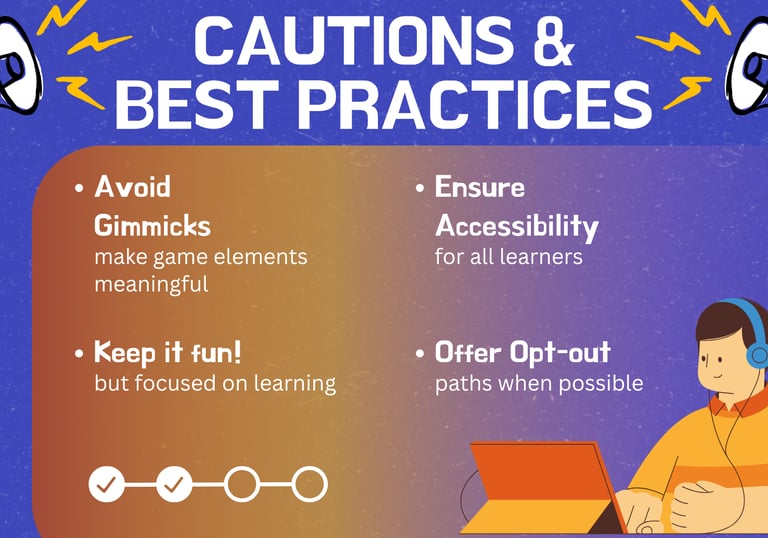
Concludes the module with practical recommendations for implementing gamification responsibly, emphasizing accessibility, learner choice, and alignment with instructional objectives.
04
05
© 2026 Kelly McKenna. All rights reserved. [updated July 2026]
KELLY MCKENNA
Navigation
Contact
Follow